125G Tropheus
Everything I had not tried with the 240G - 125G Lake Tanganyika Community Setup with Tropheus
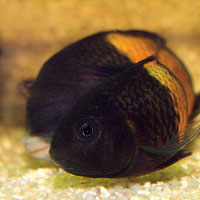 |
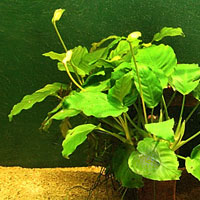 |
| Fish | Plants |
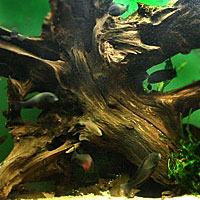 |
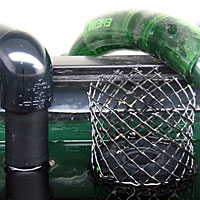 |
| Decorations | Technology |
Introduction
For several years I had a 29G South American setup next to my computer, which had been my first tank in Ohio. It was a fun little tank in which I bred Bolivian Rams. I had used it to trial some of the things I wanted to use in my 240G frontosa tank, like an under gravel jet system and a real rock background, so it was pretty high tech for a 29G, and won the tank of the month award on Cichlid-forum. One day I measured the wall on which this tank was sitting, and found it was exactly 6' long - an ideal place for a 125G tank! Once I had this idea, there was no going back. The hardest decision was what to put in the tank, and for the longest time I was planning on another South American setup with with Geophagus sp. Pindare, B. Rams, Apistos, Xiphophorus montezuma, and some plecos. I owned all these fish already ad had them spread out over various smaller tanks around the house. They should eventually end up in a 75G tank, because at the OCA X-mas party 2007, I bought a colony of 25 beautiful Tropheus sp. 'Black' (Pemba Orange Flame). The 125G Tropheus section of this web site shows how I set it all up. I like to try things out and experiment, so I did a lot of things different from the 240G Frontosa tank, just for the heck of it. I kept only the things that were so good that I couldn't even begin to think of an alternative. These are for example the automatic water change system and the fantastic lighting solution I found. This time the tank was bought second hand, since used 125G tanks seem to be cheap and plentiful at places like Craigslist, eBay, and Aquabid. I built the cabinet and canopy from scratch, and I had help from my Dad who was over to visit from Germany. I made them very similar to the Glasscages ones I bought for the 240G, but I also made some significant changes. The tank is filtered not by a sump system, but by an Eheim 2260. There is no UGJ system this time, but thanks to the powerful filter and the Eheim diffusor, the current in this tank is wicket - and the hyperactive tropheus seem to love it! The tank background this time was painted - in deep jungle green. The color was my wife's idea, and I reckon it looks pretty sharp - different from the usual black or light blue. The main decoration is a huge piece of wood, which I found locally in the forest. As with all pages of the aquaristic section of my site, I am sure by browsing through them beginners to the fish keeping hobby as well as seasoned aquarists are likely to find at least a couple of things that they will find worth implementing in their own setups. I reckon this makes it worth both, for me to write and for you to read it!
Leave a Reply
You must be logged in to post a comment.
